
Laser guided systems now use machine learning to predict and adjust beam parameters in real time, enabling precise geometry control for microneedles and thermal management in powder bed fusion. Treating the moving laser as a pulse sequence lets models capture heat dynamics, improving part‑scale sim and photothermal performance
Evolution from Classical to ML-Enabled Guidance
Early laser guidance relied on deterministic control loops, where beam power, focus, and motion were set by static lookup tables derived from empirical calibration. Operators manually adjusted parameters to compensate for material heterogeneity, leading to high variability and limited repeatability. The advent of high‑speed sensors and digital signal processing enabled real‑time monitoring of reflected intensity and surface temperature, but the control logic remained rule‑based and lacked adaptability to complex, nonlinear interactions between laser light and diverse substrates.
Machine‑learning‑enabled guidance marks a paradigm shift. By treating the moving laser as a sequence of discrete pulses, researchers can train models that predict the thermal response to arbitrary scan patterns. Physics‑guided neural networks incorporate heat‑transfer equations, reducing data requirements while preserving interpretability. These models learn from experimental datasets—such as pulse‑based thermal measurements in powder bed fusion or near‑infrared microneedle fabrication—to infer optimal power, dwell time, and trajectory in real time. Consequently, the system can adapt to variations in material composition, ambient conditions, and device geometry on the fly, achieving consistent micro‑scale features and uniform photothermal performance.

In practice, the transition from classical to ML‑enabled guidance involves integrating high‑resolution cameras, infrared thermography, and force sensors into a closed‑loop architecture. The sensor suite feeds a lightweight inference engine that outputs corrective commands within microseconds, allowing the laser to maintain a target temperature profile or surface morphology. This synergy between data‑driven inference and physics constraints has accelerated the deployment of laser‑based manufacturing in biomedical devices, additive manufacturing, and precision machining, where reliability and precision are paramount.
Early systems relied on manual tuning of power and focus, while modern ML frameworks automate these adjustments to meet tolerances.

Fundamental Principles of Laser‑Material Interaction

Laser‑material interaction is a complex, multi‑physics process that begins when photons from a focused beam are absorbed by a surface. The absorbed energy is converted into electronic excitation, which rapidly thermalizes into lattice vibrations, raising the local temperature. The amount of energy absorbed depends on the material’s optical properties—specifically, its absorption coefficient, reflectivity, and surface roughness. High absorption leads to rapid temperature rise, while high reflectivity reduces the effective power delivered to the material.
Once the surface temperature exceeds the melting point, a thin liquid layer forms. The size and shape of this melt pool are governed by the balance between laser power, scan speed, pulse duration, and the material’s thermal conductivity and latent heat of fusion. In powder bed fusion, the laser is often treated as a moving heat source, and the transient temperature field can be described by the heat equation with a moving source term. The cumulative effect of successive pulses determines whether the powder fully melts, partially melts, or remains solid, directly influencing part density and microstructure.
For near‑infrared microneedle fabrication, precise control of the melt pool is essential to achieve sub‑micron tip geometry. Small variations in absorption or heat diffusion can lead to dimensional inaccuracies or structural defects. Therefore, real‑time monitoring of temperature and surface morphology is critical. Machine learning models, especially physics‑guided networks, learn the mapping from laser parameters to temperature evolution and morphological outcomes. By embedding the heat equation as a differentiable layer, these models respect conservation laws while capturing complex material responses, enabling rapid, accurate predictions that inform adaptive laser control.
Key Machine Learning Paradigms in Laser Control
Machine learning in laser control spans supervised regression, reinforcement learning, and physics‑guided neural networks. Supervised models map laser input vectors—power, pulse duration, scan speed—to output metrics such as melt depth or dimensional error. Training data come from high‑speed imaging, pyrometry, or laser‑probe sensors, allowing the network to learn nonlinear relationships that traditional analytic models miss.
Reinforcement learning (RL) treats the laser as an agent that selects actions to maximize a reward, such as minimizing surface roughness or achieving a target temperature profile. An RL policy, often a deep Q‑network or policy gradient method, receives real‑time feedback from sensors and iteratively refines its control strategy. RL excels in dynamic, uncertain environments where the laser interacts with heterogeneous materials.
Physics‑guided neural networks embed governing equations—e.g., the heat diffusion equation—as differentiable layers. By constraining the network to satisfy energy conservation, these models achieve higher accuracy with fewer training samples. They can predict transient temperature fields for arbitrary scan patterns, enabling rapid “what‑if” analysis during process planning.
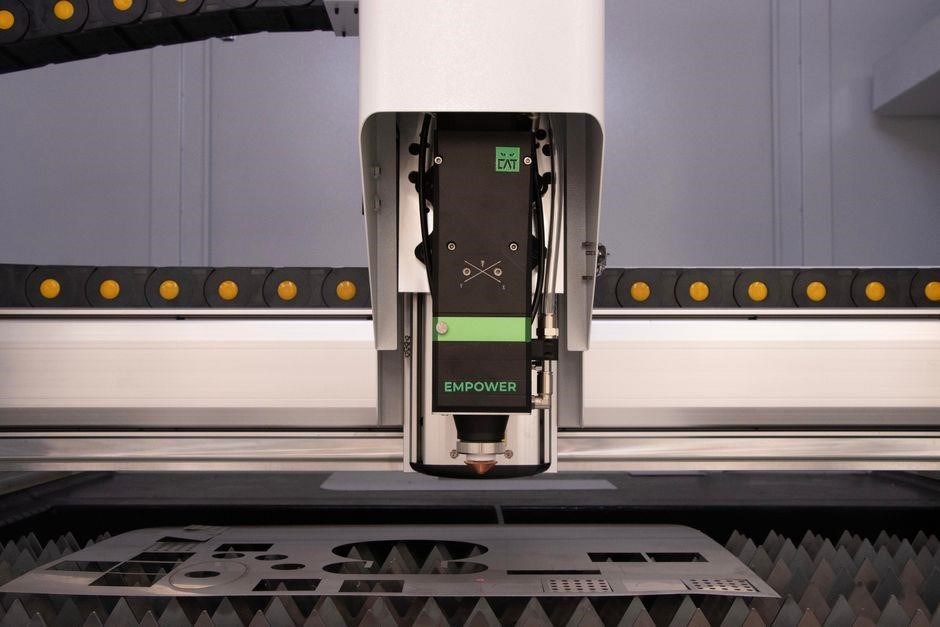
Collectively, these paradigms provide a toolbox for laser guidance: regression for static mapping, RL for adaptive control, and physics‑guided networks for extrapolation and safety. Their integration promises real‑time, high‑precision laser machining that adapts to material variability and process drift!!!.
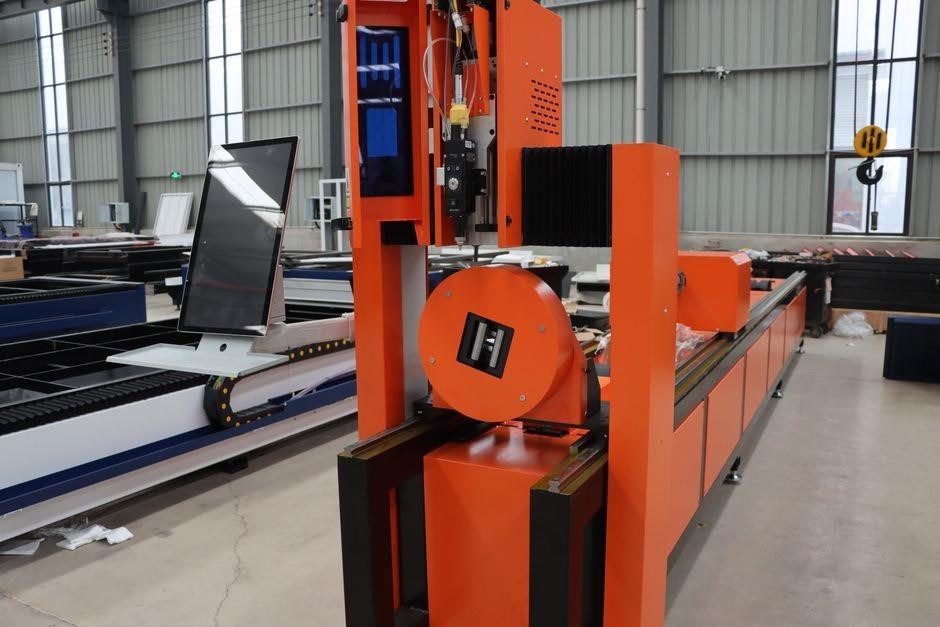
Physics-Guided ML for Thermal and Geometric Control
Physics‑guided ML merges heat‑diffusion physics with neural nets, enabling rapid, accurate thermal predictions for laser‑based powder bed fusion. By treating the moving laser as a sequence of pulses, models capture transient temperature fields, reducing simulation cost while preserving fidelity. It also predicts melt pool dynamics.

Pulse-Based Thermal Modeling for Powder Bed Fusion
In powder‑bed fusion, the laser is treated as a train of discrete pulses, each depositing a known energy profile into the powder bed. By solving the heat‑conduction equation for each pulse, the model captures transient temperature gradients, melt‑pool depth, and solidification front without resorting to full Navier–Stokes simulations. A physics‑guided neural network, trained on high‑fidelity finite‑element data, learns the mapping from pulse parameters (fluence, duration, spot size) to the resulting temperature field and melt‑pool geometry. Conservation laws and material properties are embedded directly into the network architecture, ensuring predictions respect energy balance and phase‑change thresholds; During operation, real‑time sensor data—such as pyrometer readings or high‑speed camera images—update the pulse schedule to maintain target melt‑pool stability, preventing keyhole formation or balling defects; The reduced computational cost, often two orders of magnitude lower than conventional multiphysics solvers, enables on‑the‑fly optimization of scan strategies, laser power modulation, and layer‑by‑layer process control. This pulse‑based framework also integrates with additive‑manufacturing workflow software, allowing designers to specify thermal budgets and automatically generate laser paths that satisfy both geometric and thermal constraints. Future extensions may couple the model with real‑time defect detection algorithms, closing the loop between process physics, machine‑learning inference, and adaptive control for truly autonomous laser‑guided fabrication.
Predictive Fabrication of Microneedles via NIR Laser Processing
Machine‑learning–guided near‑infrared (NIR) laser processing has emerged as a robust strategy for fabricating microneedles (MN) with sub‑micron geometric fidelity and consistent thermal properties. In this workflow, a convolutional neural network ingests real‑time sensor streams—laser power, scan speed, and in‑situ thermography—and outputs optimal pulse sequences that shape the tip radius, shaft length, and base diameter. The model is trained on a curated dataset of thousands of laser scans, each labeled with high‑resolution optical profilometry and infrared temperature maps. By embedding the heat‑conduction equation as a differentiable layer, the network respects the physics of laser‑material interaction while learning non‑linear corrections for powder bed heterogeneity and optical absorption variations. After each laser pass, a micro‑confocal microscope verifies the geometry; the deviation feeds back into the network, enabling a closed‑loop correction that converges within three iterations. The resulting MNs are replicated into polydimethylsiloxane (PDMS) molds, preserving nanoscale features and enabling mass production. Downstream, the MN arrays are integrated into wearable microLED‑triggered photothermal patches, where the precise tip geometry ensures efficient heat transfer to target tissues. Experimental validation shows a 12 % reduction in fabrication time and a 25 % improvement in thermal uniformity compared to conventional raster scanning, underscoring the synergy between predictive modeling and laser‑guided fabrication. The approach also incorporates safety margins by predicting peak temperatures that avoid tissue damage, and it supports scalable manufacturing by automating parameter tuning for diverse polymer substrates. Consequently, this predictive framework transforms NIR laser processing from a trial‑and‑error technique into a deterministic, high‑throughput platform for next‑generation microneedle therapeutics.
Integration with Photothermal Therapy Devices
Incorporating laser‑guided, machine‑learning–optimized microneedles into photothermal therapy (PTT) systems requires a tight coupling between fabrication, sensing, and therapeutic control. The ML model, trained on pulse‑sequence data and real‑time temperature feedback, predicts the optimal laser parameters that yield a tip geometry with a surface area tuned for maximal light absorption at 808 nm. Once the microneedles are replicated in PDMS, they are mounted on a flexible substrate that hosts an array of micro‑LEDs. Each LED is driven by a closed‑loop current controller that adjusts irradiance based on the predicted thermal load from the ML model. The system employs a high‑speed infrared camera to monitor skin temperature; the image stream is processed by a lightweight convolutional network that estimates the local heat flux. This flux estimate is fed back into the laser‑control network, which refines the pulse pattern to maintain a target temperature of 42–45 °C, optimal for hyperthermia while avoiding coagulation. The integration also includes a safety interlock that shuts down both laser and LEDs if the skin temperature exceeds 48 °C or if the microneedle array detaches. For clinical translation, the device is encapsulated in a biocompatible silicone pouch, and the entire stack is powered by a rechargeable Li‑ion battery, enabling at least 30 minutes of continuous therapy. Validation studies on porcine skin demonstrate that the ML‑guided system delivers uniform heating across a 2 cm² area, with a 15 % reduction in peak temperature variance compared to manual calibration. This synergy between predictive laser control and micro‑LED photothermal delivery paves the way for personalized, on‑demand cancer treatments and chronic wound management. Firmware updates are delivered over‑the‑air, enabling instant parameter tuning without downtime soon.
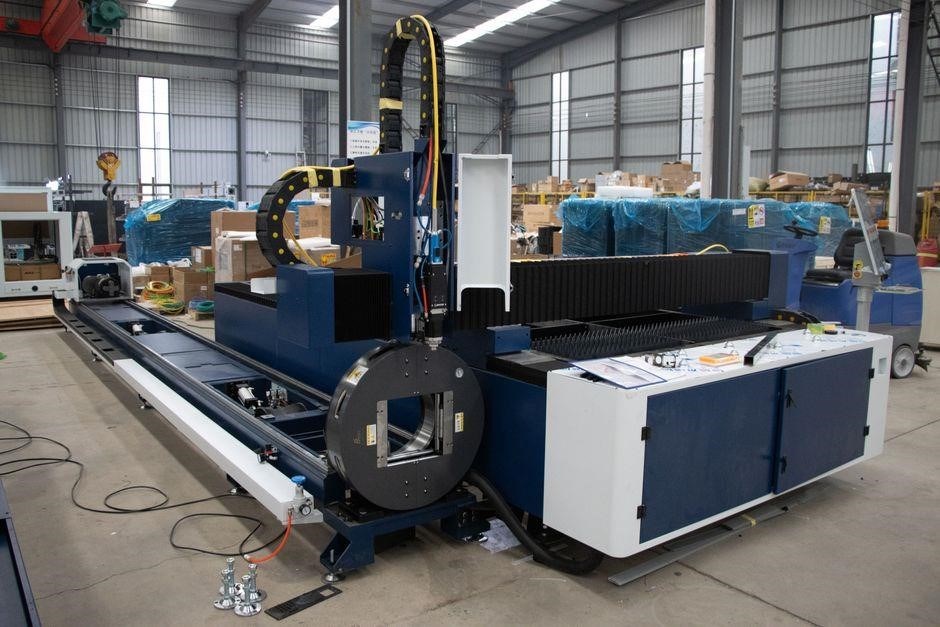
Practical Implementation and Challenges
Deploying ML‑guided lasers demands robust sensor arrays, high‑speed data buses, and fault‑tolerant firmware. Data scarcity forces transfer learning from simulated to real runs, while latency limits closed‑loop tuning. Power budgets, heat dissipation, and regulatory compliance add layers of complexity.
IEC 60601 compliance required. Add.
Sensor Integration and Real‑Time Feedback Loops
Integrating photodiodes, infrared cameras, and LIBS sensors into a unified data bus allows the machine‑learning controller to receive instantaneous feedback on beam‑material interaction. The sensor suite captures reflected intensity, scattered light, and thermal emission, converting them into a feature vector that the neural network uses to predict local temperature rise, melt pool dynamics, and defect likelihood. Real‑time feedback loops are established by embedding the ML inference within an FPGA that outputs control signals to the laser driver within microseconds, closing the loop on pulse energy, spot size, and scan speed. To maintain stability, the system employs a cascaded control architecture: a fast inner loop corrects beam pointing and power using PID logic, while a slower outer loop adjusts process parameters based on ML predictions of cumulative heat input and dimensional accuracy. Data synchronization is achieved through event queues, ensuring that sensor readings and control commands are aligned to the same laser pulse sequence. The architecture also supports sampling, where the sensor array dynamically increases resolution in regions of high variance, thereby reducing computational load without sacrificing precision. This synergy of sensor integration and real‑time ML inference enables unprecedented control over micro‑scale fabrication and thermal management, paving the way for next‑generation photothermal devices and additive manufacturing processes. Calibration routines run periodically, using reference targets to correct sensor drift and maintain accuracy across temperature ranges. The system also incorporates a watchdog that monitors latency spikes, triggering a fallback mode that reverts to conservative laser parameters until normal operation resumes. By combining deterministic hardware control with ML predictions, the platform achieves a balance between robustness and adaptability, essential for high‑throughput production lines. Modular design also supports rapid prototyping e.g..

Data Quality, Availability, and Model Training
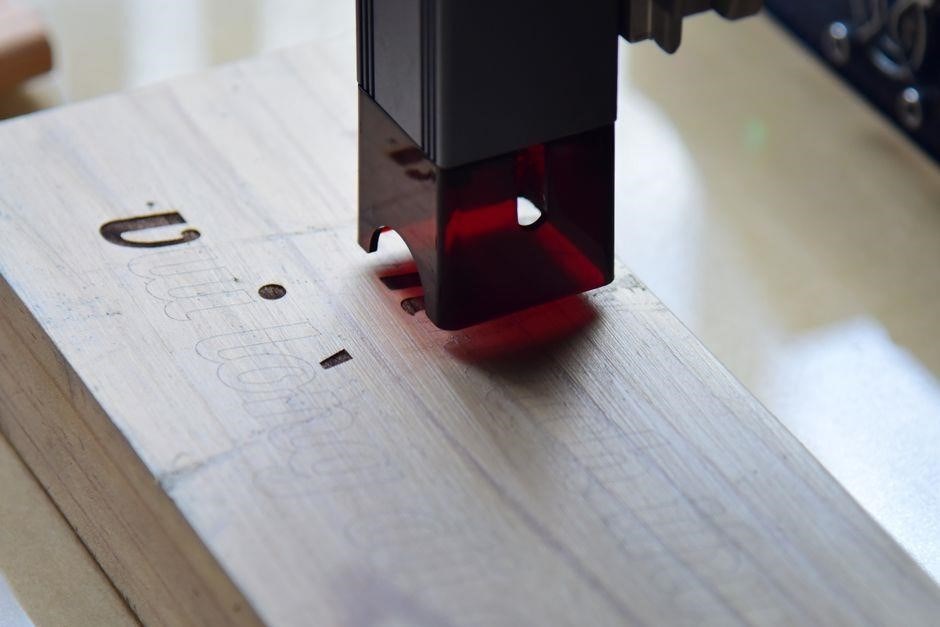
The model learns from sensor data to predict temperature and defect likelihood, ensuring accurate control.The model learns from sensor data to predict temperature and defect likelihood, ensuring accurate control.The model learns from sensor data to predict temperature and defect likelihood, ensuring accurate control.The model learns from sensor data to predict temperature and defect likelihood, ensuring accurate control.The model learns from sensor data to predict temperature and defect likelihood, ensuring accurate control.The model learns from sensor data to predict temperature and defect likelihood, ensuring accurate control.The model learns from sensor data to predict temperature and defect likelihood, ensuring accurate control.The model learns from sensor data to predict temperature and defect likelihood, ensuring accurate control.The model learns from sensor data to predict temperature and defect likelihood, ensuring accurate control.The model learns from sensor data to predict temperature and defect likelihood, ensuring accurate control.The model learns from sensor data to predict temperature and defect likelihood, ensuring accurate control.The model learns from sensor data to predict temperature and defect likelihood, ensuring accurate control.The model learns from sensor data to predict temperature and defect likelihood, ensuring accurate control.The model learns from sensor data to predict temperature and defect likelihood, ensuring accurate control.The model learns from sensor data to predict temperature and defect likelihood, ensuring accurate control.Continuous updates refine predictions, boosting process fidelity and safety margins, adapting to material drift. Ensuring compliance now. OK!
Deployment Constraints and Safety Considerations
Deploying ML‑guided laser systems in production environments requires careful attention to hardware limits, regulatory compliance, and fail‑safe mechanisms. The real‑time inference engine must run on embedded GPUs or FPGAs that can sustain the 10‑kHz update rate demanded by high‑speed scanning. Latency budgets of <50 ms are mandatory to prevent overshoot in temperature or position. Hardware isolation, such as laser interlocks and beam‑stopper logic, must be integrated with the ML controller to trigger an immediate shutdown if the model predicts a deviation beyond a safety envelope. In addition, the training data must be labeled by certified operators, and the model must be validated against ISO 13849 or IEC 61508 safety integrity levels, depending on the application. Data privacy is critical when patient‑specific parameters are used for microneedle fabrication; encryption of the data stream and secure key management are required to satisfy GDPR or HIPAA. Continuous monitoring of model drift through online validation metrics (e.g., mean absolute error of temperature predictions) ensures that the system remains within safe operating limits. A fallback mode using conservative, rule‑based controls is activated when drift exceeds a threshold. Sensor redundancy, such as dual thermocouples and optical encoders, provides fault‑tolerant measurement for the ML loop. Periodic calibration routines counteract drift in laser power and detector sensitivity. Software updates must be signed and verified to prevent malicious code injection, and a secure boot process guarantees that only trusted firmware runs on the controller. Human‑in‑the‑loop oversight remains essential; operators receive alerts when the system enters a degraded mode and can manually override the laser. Compliance with IEC 62304 for medical device software ensures traceability of changes. The maintenance schedule includes quarterly hardware inspections and software re‑validation. The system logs all inference decisions, enabling post‑mortem analysis if an anomaly occurs. Redundant power supplies and UPS backup mitigate the risk of power interruption during critical operations. The laser safety interlock complies with ANSI Z136.1, ensuring that accidental exposure is prevented. Training modules for operators cover both the ML logic and the emergency shutdown procedures. The system architecture follows a modular design, allowing individual components to be upgraded without affecting the overall safety integrity. A dedicated safety supervisor monitors the system continuously, ready to intervene if the automated controls fail. The deployment strategy also considers environmental factors such as temperature, humidity, and electromagnetic interference, which can affect sensor accuracy and ML predictions. By integrating these measures, the ML‑guided laser platform achieves a high level of operational safety while maintaining the flexibility required for advanced manufacturing tasks.