
Outfoxed: A Comprehensive Guide to Gameplay
Outfoxed is a cooperative deduction game for 2-4 players‚ challenging you to identify the sneaky fox who stole Mrs. Plumpert’s pie!
Players gather clues and utilize the evidence scanner to eliminate suspects.
Outfoxed is a delightful cooperative deduction game designed for families and young detectives! Players‚ aged 5 and up‚ embark on a thrilling adventure to uncover the identity of the cunning fox who pilfered Mrs. Plumpert’s prized pie. Unlike competitive games‚ Outfoxed fosters teamwork‚ encouraging players to collaborate and share information to solve the mystery before time runs out.
The game cleverly blends elements of logic‚ observation‚ and deduction‚ making it both entertaining and educational. Players move around a vibrant game board‚ collecting clues and utilizing a unique evidence scanner to eliminate potential suspects. The core gameplay revolves around analyzing suspect traits and strategically prioritizing clues to narrow down the possibilities.
Successfully catching the thief requires effective communication and a shared understanding of the evidence. Outfoxed provides a captivating experience that promotes critical thinking and problem-solving skills in a fun and engaging way. It’s a perfect choice for family game nights!
What is Outfoxed? ‒ A Cooperative Deduction Game
Outfoxed distinguishes itself as a truly cooperative board game‚ meaning all players work together to achieve a single goal: identifying the fox thief! This contrasts sharply with competitive games where players vie against each other. The game centers around deduction – players must analyze clues‚ eliminate suspects‚ and strategically use the evidence scanner to pinpoint the culprit before they escape.
The cooperative nature of Outfoxed encourages communication and shared decision-making. Players discuss their findings‚ share insights‚ and collectively determine the best course of action. It’s a fantastic way to build teamwork skills and foster a sense of camaraderie. The game’s design ensures everyone contributes to solving the mystery.
Successfully catching the fox demands careful observation‚ logical reasoning‚ and efficient use of time. Outfoxed provides a unique and rewarding gaming experience that emphasizes collaboration over competition‚ making it ideal for families and friends.
Game Components: A Detailed Inventory
Outfoxed includes a thoughtfully designed set of components crucial for a successful investigation. The game features 16 suspect cards‚ each depicting a different fox with unique characteristics‚ and 16 corresponding thief cards – one of which secretly identifies the actual pie thief. Players utilize 12 clue markers to denote evidence found during their search.
Four colorful detective hats allow each player to embody their role as a sleuth. A central game board depicts a charming neighborhood‚ serving as the backdrop for the investigation. The innovative evidence scanner is a key component‚ enabling players to eliminate suspects based on collected clues.
The game also includes a pie piece‚ used to determine the starting player – the most recent pie eater gets the honor! These components combine to create an immersive and engaging deduction experience‚ fostering teamwork and strategic thinking.

Setting Up the Game
Begin by placing the game board centrally. Each detective chooses a hat. Shuffle suspect cards and place them face down. Secretly select and hide the thief card within the container!
Preparing the Game Board
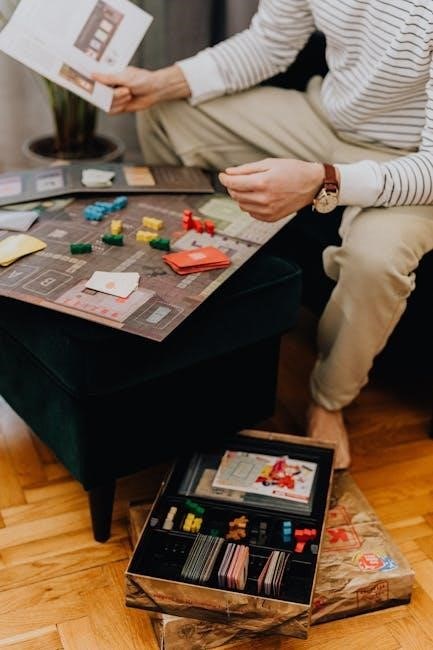
To begin setting up the Outfoxed game board‚ place the central game board within easy reach of all players. This board depicts a charming neighborhood with various locations the detectives will visit during their investigation. Ensure there’s ample space around the board for placing clue markers and suspect cards.
Next‚ carefully position the clue markers around the board‚ specifically on the designated spaces indicated by the illustrations. These spaces represent potential locations where clues might be found. The placement of these markers is crucial‚ as they guide the detectives’ movements and provide vital information throughout the game. Remember‚ the clues need to be placed on the board‚ not beside it!
Finally‚ familiarize yourself with the board’s layout‚ noting the different paths and locations. Understanding the board’s geography will be essential for efficient movement and clue gathering during gameplay. A well-prepared board sets the stage for a thrilling cooperative deduction experience!
Distributing Detective Hats
Each player selects a unique detective hat at the start of the game‚ representing their role in the cooperative investigation. There are typically four distinct detective hats available‚ each featuring a different animal character – a charming touch that adds to the game’s appeal.
Once a player has chosen their hat‚ they place it in front of them‚ signifying their participation in the hunt for the pie thief. The detective hats serve as a visual reminder of each player’s involvement and help to foster a sense of teamwork.
It’s important to ensure that each player has a hat before proceeding to the next setup step. This simple act of choosing a hat helps to immerse players in the game’s narrative and prepares them for the deductive challenges ahead. The hats are placed in the center of the game board.
Shuffling and Placing Suspect Cards
The game includes sixteen suspect cards‚ each depicting a different animal potentially involved in the pie theft. Before beginning gameplay‚ these cards must be thoroughly shuffled to ensure a random and unpredictable selection of the culprit.
After shuffling‚ the suspect cards are arranged face down in a grid pattern‚ forming a display that all players can access. This display allows players to visually examine the suspects as they gather clues and eliminate possibilities.
Carefully arranging the cards ensures that no player can accidentally glimpse the identity of the thief during setup. The suspect cards are a crucial element of the deduction process‚ providing players with the information needed to solve the mystery.
Secretly Selecting the Thief
A critical step in setting up Outfoxed is the secret selection of the thief. From the shuffled deck of suspect cards‚ one card is chosen without any player looking at it. This card represents the fox responsible for stealing Mrs. Plumpert’s delicious pie!
The chosen thief card is then placed face down into a designated container – often a special box or envelope included with the game. This ensures the thief’s identity remains hidden throughout the investigation.
Maintaining the secrecy of the thief is paramount to the game’s challenge and enjoyment. Players must rely solely on the clues they gather to deduce the culprit‚ rather than simply knowing the answer from the start. This hidden card drives the entire cooperative deduction experience.
Placing Clue Markers
After selecting the thief‚ the next crucial setup step involves strategically placing the clue markers on the game board. There are twelve clue markers in total‚ representing different pieces of evidence left behind by the pie-pilfering fox.
These markers are distributed on the spaces indicated on the clue cards. It’s important to note that the clues need to be placed directly on the board spaces‚ not beside them‚ as highlighted in gameplay guidance. This placement is vital for players to gather evidence during their turns.
The distribution of these markers creates the investigative landscape‚ guiding detectives towards potential suspects and ultimately‚ the identity of the fox. Careful placement ensures a balanced and engaging deduction experience for all players.
Gameplay Mechanics
Gameplay revolves around taking turns‚ moving detectives‚ gathering clues‚ and utilizing the evidence scanner to eliminate suspects. Cooperation and efficient deduction are key to success!
Taking Turns: The Flow of Play
Each player takes a turn performing actions to deduce the identity of the pie thief. The player who most recently enjoyed a slice of pie begins the game‚ and play proceeds clockwise around the table. On your turn‚ you can move your detective to a new location on the board.
Movement allows you to reach different locations to gather clues. Once at a location‚ you can reveal a clue marker to discover information about the thief’s potential traits. Remember‚ cooperation is vital; discuss the clues with your fellow detectives! After moving and gathering a clue‚ your turn ends‚ and the next player takes their turn.
The game continues with players strategically moving‚ collecting clues‚ and sharing information until either the thief is correctly identified‚ or time runs out. Effective communication and collaborative deduction are essential to outsmart the fox!
Moving Around the Board
Detectives navigate the board using a simple movement system. On your turn‚ you can move your detective piece to an adjacent location connected by a path. Strategic movement is crucial for efficiently gathering clues and covering the board. Consider the locations of potential clues and prioritize reaching areas that offer the most promising leads.
Remember that each detective has a unique movement ability‚ adding a layer of tactical depth. Utilize these abilities to your advantage‚ allowing you to reach distant locations or quickly investigate key areas. Coordinate your movements with other players to ensure comprehensive coverage of the board.
Efficient movement saves valuable time‚ as the clock is ticking! Plan your route carefully‚ considering the locations of clue markers and the potential paths the thief may have taken. Don’t waste turns backtracking; focus on exploring new areas and uncovering vital evidence.
Gathering Clues: How to Collect Evidence
Clues are the key to identifying the thief! Scattered across the board‚ these markers provide vital information about the fox’s identity. When a detective lands on a space with a clue marker‚ they collect it. Each clue reveals a specific trait – a color‚ a type of footwear‚ or a distinguishing feature.
Carefully examine each clue‚ as it eliminates potential suspects. Share the information with your fellow detectives; cooperation is essential! Discuss the implications of each clue and how it narrows down the list of possible culprits; Remember‚ the thief’s identity is hidden amongst the suspect cards.
Prioritize collecting clues from different locations to gain a broader range of information. Don’t focus solely on one area; explore the entire board to uncover all available evidence. The more clues you gather‚ the closer you’ll get to catching the fox!
Using the Evidence Scanner: Eliminating Suspects
The Evidence Scanner is a crucial tool for narrowing down the suspect list. Once you’ve collected clues detailing specific traits‚ you can use the scanner to eliminate foxes that don’t match those characteristics. Select the trait from the scanner – color‚ footwear‚ or feature – and then turn the dial to reveal the corresponding suspect cards.
Any suspect card displaying the selected trait is safe; they couldn’t be the thief! Flip those cards face up‚ removing them from consideration. This process of elimination is central to the game’s cooperative nature. Share your findings with the team‚ ensuring everyone understands which suspects have been cleared.
Strategic use of the scanner is vital. Don’t waste turns scanning for traits you already know are common among the suspects. Focus on unique characteristics to maximize the scanner’s effectiveness and quickly identify the guilty fox!
Decoding Clues: Understanding the Information
Clues in Outfoxed aren’t straightforward; they provide hints about the thief’s characteristics – color‚ what they’re wearing‚ or a unique feature. When you land on a clue space‚ carefully examine the revealed token. It won’t directly name the fox‚ but will indicate a specific trait to look for.
Pay close attention to detail. A clue showing paw prints suggests the thief has a particular type of footwear. A colored token indicates the fox’s fur color. These clues are the foundation of your deduction process. Share the information with your fellow detectives‚ discussing potential matches and mismatches.

Remember‚ teamwork is key. Combining clues and analyzing suspect cards together will lead you to the correct answer. Don’t rush to conclusions; carefully consider all available information before using the Evidence Scanner!

Advanced Strategies
Mastering Outfoxed requires strategic teamwork. Prioritize clue collection‚ efficiently move around the board‚ and analyze suspect traits to quickly deduce the pie thief’s identity.
Cooperative Deduction: Working as a Team

Outfoxed thrives on collaborative gameplay. Success hinges on open communication and shared deduction amongst all detectives. Discuss observed clues openly – what suspect traits do they eliminate? Don’t hoard information! Each player’s perspective is valuable.
Strategically divide tasks. One detective might focus on moving to specific locations to gather clues‚ while another analyzes the evidence scanner results. Remember‚ you’re racing against time! Avoid redundant actions; coordinate movement to efficiently cover the board.
When using the evidence scanner‚ clearly articulate which suspect traits are being ruled out. A collective understanding of the remaining possibilities is crucial. Regularly reassess your deductions as new clues emerge. Effective teamwork is the key to catching the fox before they escape!
Analyzing Suspect Traits: Identifying Key Characteristics
Each suspect in Outfoxed possesses unique traits – footprints‚ fur color‚ or items carried. These characteristics are vital for deduction. Carefully examine the clue cards; they depict specific traits found at the crime scene.
Compare the clues against each suspect card. If a suspect doesn’t match a trait on a clue‚ they can be eliminated using the evidence scanner. Pay close attention to negative information – what a suspect isn’t is just as important as what they are.
Consider combinations of traits; A clue showing blue footprints narrows the field considerably; Focus on identifying suspects who lack matching characteristics. Remember‚ the thief will have traits matching the clues‚ while others won’t. This systematic analysis is crucial for swift identification!
Optimizing Movement: Efficiently Covering the Board
Strategic movement is key in Outfoxed‚ as time is limited! Plan your route to maximize clue gathering. Prioritize locations with multiple potential clue markers. Don’t waste turns revisiting spaces already thoroughly investigated;
Coordinate with fellow detectives. Discuss which areas each player will cover to avoid redundancy. Consider the layout of the board; some paths are shorter than others. Utilize these to quickly reach distant clue locations.
Remember‚ the goal isn’t just to reach clues‚ but to reach the right clues. Focus on areas that align with the initial suspect pool. Efficient movement ensures you gather vital evidence before time runs out‚ increasing your chances of catching the fox!
Prioritizing Clues: Focusing on the Most Valuable Information
Not all clues in Outfoxed are created equal! Initially‚ focus on clues that eliminate multiple suspects simultaneously. These provide the biggest impact on narrowing down the possibilities. Pay close attention to the types of clues revealed – footprints‚ fur color‚ or item drops.
Consider the suspect traits. If a clue doesn’t match a suspect’s known characteristics‚ it’s less valuable. Prioritize clues that directly contradict or confirm suspect details. Remember to share information with your team; collective analysis is crucial.
Don’t get bogged down in investigating every single clue. Strategic clue selection‚ based on suspect elimination potential‚ is vital for success. Efficiently prioritizing clues maximizes your deduction power before the fox escapes!
Managing Time: The Importance of Speed
In Outfoxed‚ time is of the essence! The fox is attempting to escape‚ and you have a limited number of turns to catch them. Efficient gameplay is paramount to success. Avoid lengthy debates and encourage quick‚ decisive actions from each detective.
Minimize wasted movement. Plan your routes to gather multiple clues in a single turn. Utilize the evidence scanner promptly to eliminate suspects and streamline your investigation. Remember‚ every second counts as the fox advances along the escape route.
Effective communication is key to speedy deduction. Clearly articulate your findings and collaborate with your teammates to quickly analyze clues. Don’t hesitate to make informed guesses‚ but be prepared to adjust your strategy as new evidence emerges!

Winning and Losing
You win by correctly identifying the thief before they reach the end of the path! You lose if the fox escapes‚ meaning you run out of turns before catching them.
How to Win: Catching the Fox
To win Outfoxed‚ detectives must collaboratively deduce which fox pilfered Mrs. Plumpert’s delicious pie and pinpoint their escape route. This requires strategic movement around the board‚ diligent clue gathering‚ and skillful use of the evidence scanner. The core of victory lies in eliminating suspects based on the clues revealed.
As you move‚ collect clue markers that provide vital information about the thief’s characteristics – their color‚ hat‚ and footprints. Utilize the evidence scanner to cross-reference these clues with the suspect cards‚ systematically ruling out possibilities. Effective communication is paramount; share your findings with fellow detectives to build a comprehensive understanding of the case.
Once you believe you’ve identified the culprit‚ all players must agree on the suspect and their escape route. A correct accusation before the fox reaches the end of the path secures a triumphant win for the team! Remember‚ teamwork and sharp deduction are your greatest assets in this thrilling pursuit.
How to Lose: Running Out of Time
Unfortunately‚ even the most astute detectives can fail in Outfoxed. The primary way to lose is by allowing the fox to reach the end of the escape path before successfully identifying the thief. This happens when time runs out‚ represented by the fox pawn progressing along the board.
Each turn the fox advances‚ creating a sense of urgency. If detectives spend too long deliberating‚ fail to efficiently gather clues‚ or misinterpret the evidence‚ the fox gains ground. A lack of cooperative strategy and clear communication can also contribute to a swift defeat.
The game emphasizes quick thinking and decisive action. Hesitation can be costly! If the fox successfully escapes without being caught‚ Mrs; Plumpert’s pie remains stolen‚ and the detectives are left to ponder their missed opportunities. Remember‚ speed and accuracy are crucial to prevent the fox from vanishing into the night.
The Role of Pie: Starting Player Determination
The delicious pie isn’t just the object of the fox’s desire; it also determines who begins the investigation in Outfoxed! A charming and thematic rule dictates that the player who most recently enjoyed a slice of pie gets the honor of being the first detective to take their turn.
This lighthearted method adds a fun‚ relatable element to the game‚ encouraging players to share a little about themselves. If no one has recently indulged in pie‚ a different method‚ such as the youngest player‚ can be used to select the starting detective.
The first player then initiates the flow of play‚ moving around the board and beginning the crucial task of gathering clues. This simple rule ensures a fair and engaging start to the cooperative deduction process‚ setting the stage for a thrilling pursuit of the pie thief!

Variations and Expansions
Outfoxed offers adjustable difficulty levels to suit different players. House rules can also be implemented to customize the experience‚ enhancing replayability and tailoring the game to preferences.
Difficulty Levels: Adjusting the Challenge
Outfoxed cleverly incorporates adjustable difficulty‚ making it accessible for a wide range of players‚ from young children to seasoned detectives. The primary method of adjusting the challenge lies in the number of clue markers initially placed on the board. For a simpler experience‚ especially for first-time players or younger children‚ begin with more clue markers distributed across the locations.
This provides more immediate leads and reduces the pressure of the ticking clock. Conversely‚ for a more challenging game‚ reduce the number of starting clue markers. This forces players to strategically plan their movements‚ carefully consider each clue‚ and rely more heavily on deductive reasoning. Experienced players might even opt to play with a minimal number of clues‚ truly testing their collaborative skills.
Furthermore‚ the speed at which players move around the board can also subtly influence the difficulty. Encouraging quicker decision-making and efficient route planning naturally increases the challenge. Remember‚ the goal is to catch the fox before time runs out!
House Rules: Customizing the Experience
Outfoxed’s flexible gameplay invites players to create their own house rules‚ tailoring the experience to their preferences and playstyles. Some families enjoy adding a “Detective Assist” rule‚ allowing a more experienced player to offer subtle guidance to younger detectives without directly solving the mystery for them. Others introduce a “False Lead” mechanic‚ adding a few extra‚ irrelevant clues to the board to increase the complexity.
To enhance the narrative‚ consider assigning each detective a unique backstory or special ability. Perhaps one detective is particularly observant‚ allowing them to draw an extra clue card‚ or another is a master of disguise‚ enabling them to move an extra space.
For a cooperative twist‚ implement a rule where players can freely share clue cards‚ fostering even greater teamwork. Remember to clearly define any house rules before starting the game to ensure a fair and enjoyable experience for everyone involved!